
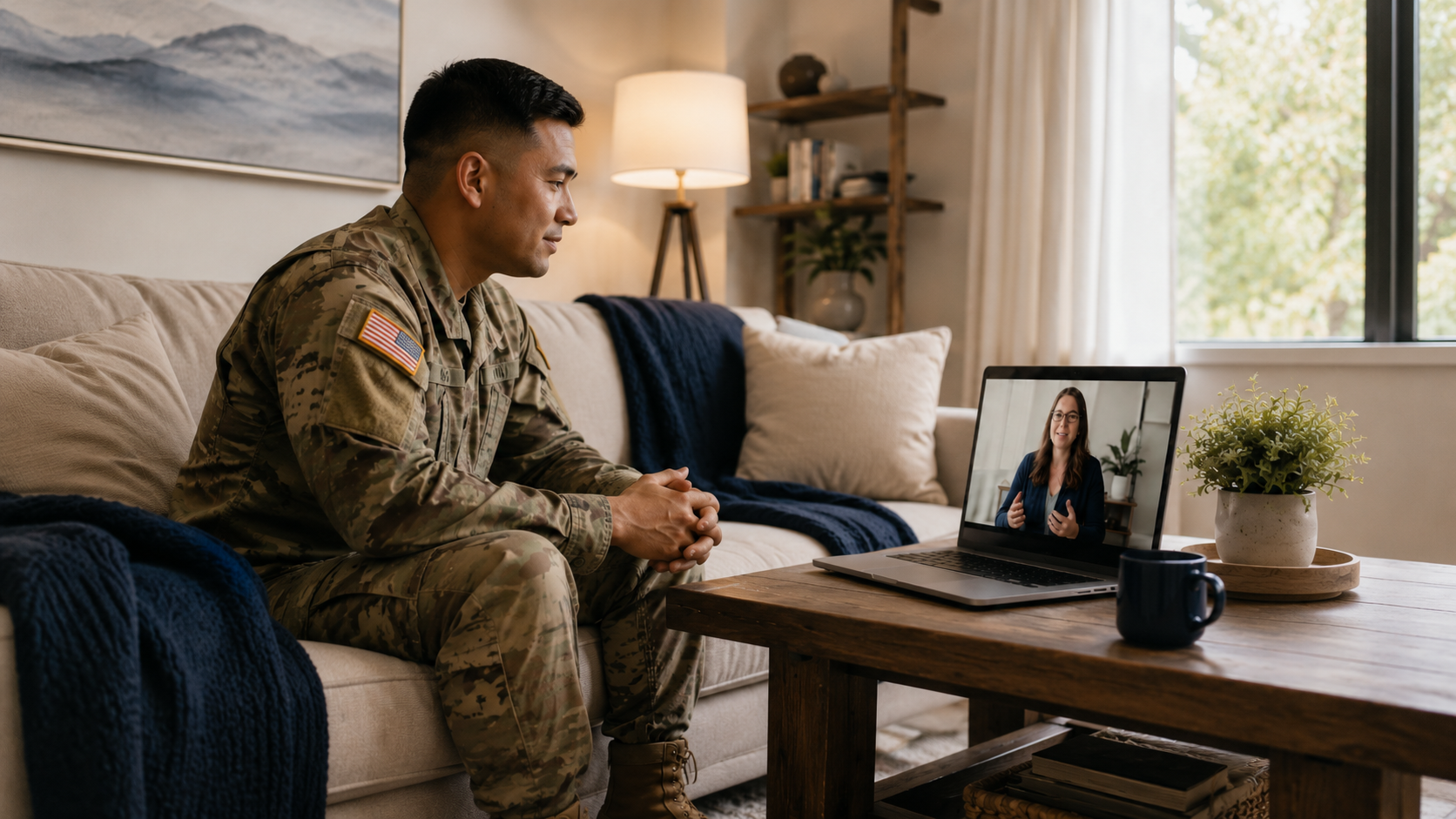
Telehealth Therapy and Access to Care for Military Families
Military families often face barriers to mental health care that civilians may never encounter. Frequent relocations, deployments, overseas assignments, changing duty stations, and unpredictable schedules can make it difficult to establish consistent care with a trusted provider.
For many military-connected individuals, telehealth therapy has changed that experience.
Virtual care allows service members, veterans, spouses, and families to connect with qualified mental health professionals from wherever they are, helping reduce geographic and scheduling barriers that might otherwise interrupt treatment. For individuals navigating trauma, stress, transitions, or family challenges, that continuity can make a meaningful difference.
Why Access to Mental Health Care Can Be Difficult for Military Families
Military life is highly mobile. A family may build a relationship with a therapist in one location only to receive orders to move months later. A deployment may suddenly separate a service member from their usual support system. An overseas assignment may make local mental health care more difficult to access, especially when language, culture, availability, or provider specialization becomes a factor.
Military-connected individuals may also face:
Limited provider availability near an installation
Long travel distances for appointments
Changing schedules and operational demands
Frequent permanent change of station moves
Deployment and reintegration challenges
Difficulty finding providers familiar with military culture
Limited access to specialty care in some locations
These obstacles can make it harder to begin therapy and even harder to maintain it over time.
How Telehealth Therapy Supports Continuity of Care
Mental health treatment often works best when clients have the opportunity to build trust and consistency with a provider.
Frequent relocations can interrupt that relationship.
With virtual therapy, clients may be able to continue meeting with a provider virtually when appropriate and legally permitted, rather than starting over every time circumstances change.
For military families, continuity can be particularly valuable during periods such as:
Deployment preparation
Relocation
Reintegration after deployment
Transition out of military service
Separation from established support networks
Virtual care does not eliminate every barrier. Mental health professionals must still comply with licensing and practice requirements based on where a client is physically located. However, when virtual treatment is available, it can offer greater flexibility than traditional office-based care alone.
Therapy During Deployment and Overseas Assignments
Deployments and overseas assignments can create emotional strain for both service members and the people supporting them at home.
A service member may be adjusting to an unfamiliar environment, increased operational stress, isolation, or exposure to traumatic events. Meanwhile, spouses and family members may be managing additional household responsibilities, parenting demands, uncertainty, and separation.
Virtual care can sometimes make professional counseling services more accessible during these transitions.
Depending on location, availability, and provider requirements, a therapy appointment may be conducted through a secure video platform rather than requiring the individual to travel to an office.
This flexibility can be especially valuable for military spouses who relocate frequently or live in areas where specialized care is difficult to find.
The Benefits of Virtual Therapy for Military Populations
The appeal of virtual therapy goes beyond convenience.
Greater Flexibility
Military schedules are rarely predictable. Virtual appointments may offer more flexibility for individuals balancing duty responsibilities, caregiving, work, and family life.
Reduced Geographic Barriers
Telehealth can connect individuals with providers outside their immediate community when permitted, making specialized care more accessible.
Increased Privacy and Comfort
Some people feel more comfortable speaking with a therapist from their own home or another private setting rather than visiting a clinic.
Easier Access to Specialized Care
A client seeking a mental health specialist with experience in trauma, military culture, anxiety, or family transitions may have more options through virtual care than within a limited local area.
Better Continuity
When circumstances permit continued treatment, virtual appointments can reduce disruptions caused by travel, moves, or changing schedules.
These benefits can make mental health care feel more realistic and sustainable for individuals living within the demands of military life.

How Online Trauma Therapy Can Support Healing
Trauma does not always require in-person treatment.
For some individuals, online trauma therapy can provide effective support while allowing them to participate from a familiar environment.
Virtual trauma care may involve approaches designed to help clients:
Understand trauma responses
Develop grounding and coping strategies
Process difficult experiences
Reduce anxiety and hypervigilance
Strengthen emotional regulation
Build resilience
Improve relationships and daily functioning
Not every trauma treatment or situation is appropriate for virtual care, and a qualified provider should consider each client’s needs, safety, symptoms, and circumstances.
When telehealth therapy is appropriate, however, it can help make trauma-informed support available to people who might otherwise struggle to access consistent care.
Virtual Therapy Can Support the Whole Military Family
Mental health support in military communities is not limited to the person wearing the uniform.
Spouses, partners, children, veterans, and caregivers can all experience the effects of military life.
Virtual therapy may support families navigating:
Deployment separation
Relationship strain
Parenting stress
Frequent relocations
Caregiver burnout
Reintegration
Grief and loss
Veteran transitions
Anxiety and depression
For a military spouse who has moved repeatedly, virtual care may offer a more accessible way to prioritize emotional wellness. For a veteran adjusting to civilian life, it may provide an alternative to traveling long distances for support. For a family navigating deployment, it can provide a consistent space to process stress and strengthen coping skills.

Choosing Professional Counseling Services Online
Not all virtual mental health services are the same.
When considering professional counseling services, military-connected individuals should look beyond convenience and consider the provider’s qualifications, experience, and approach to care.
Questions to consider include:
Is the provider licensed to treat clients in your current location?
Do they have experience working with military members or families?
Are they trained in the concerns you want to address?
Do they offer trauma-informed care when appropriate?
How are virtual sessions conducted and protected?
What happens if your location changes?
Does their approach align with your long-term wellness goals?
The right therapeutic fit matters whether treatment takes place in an office or online.
A strong relationship with a mental health professional can help clients feel understood, supported, and empowered to make meaningful changes over time.
Telehealth Therapy and Long-Term Mental Wellness
Virtual care is not simply a temporary substitute for traditional therapy.
For many people, it can become a consistent part of their mental wellness journey.
By making care easier to integrate into daily life, telehealth therapy can support ongoing emotional growth, healthier coping strategies, improved relationships, and greater resilience through periods of transition.
That can be especially important for military populations, where change is often unavoidable.
Rather than repeatedly interrupting care because of location, schedules, or military responsibilities, virtual treatment can help some individuals maintain a stronger connection to professional support.
ON THIS PAGE
RELATED BLOGS
- Overcoming Challenges by Building Emotional Resilience
 Learn how emotional burnout affects military mental health, recognize the stages of burnout, and know when it’s time to seek professional support.
- Therapy for Veterans: What to Look for in a Mental Health Provider
 Learn how emotional burnout affects military mental health, recognize the stages of burnout, and know when it’s time to seek professional support.
Share this Blog



Frequently Asked Questions
What is telehealth therapy?
Telehealth therapy is mental health care provided remotely, typically through secure video technology. It allows clients to meet with a qualified mental health professional without attending an in-person office visit.
Is virtual therapy helpful for military families?
Virtual therapy can be especially helpful for military families experiencing frequent moves, deployments, changing schedules, or limited access to specialized providers. Whether care is available depends on factors such as location, licensing requirements, and individual needs.
Can online trauma therapy be effective?
Online trauma therapy can be appropriate for many individuals and may include evidence-based techniques for managing trauma-related symptoms. A mental health professional should determine whether virtual trauma treatment is suitable for each client’s circumstances.
Can I attend a therapy appointment while stationed overseas?
In some cases, yes, but provider licensing, jurisdiction, location, and other legal or professional requirements may affect whether therapy can continue while you are overseas. It is important to discuss upcoming moves or travel with your provider in advance.
How do I choose a mental health specialist for virtual care?
Look for a licensed provider with experience relevant to your concerns and, when important to you, familiarity with military culture. You should also ask about virtual-care policies, licensing limitations, privacy practices, and what happens if your location changes.
Stay Connected to Care Wherever Military Life Takes You
Military life can involve constant change, but access to emotional support should not have to feel equally unpredictable.
At The Centers for Counseling and Wellness, Int’l, we understand the challenges military members, veterans, spouses, and families can face when trying to maintain consistent mental health care. Our whole-person approach considers not only immediate symptoms, but also the relationships, transitions, stressors, and experiences that shape long-term wellness.
When appropriate and available based on location, telehealth therapy can provide a flexible way to stay connected to professional support through deployments, relocations, transitions, and everyday life.

Contact The Centers for Counseling and Wellness, Int’l to learn more about virtual therapy options and whether telehealth services may be appropriate for your needs.
Dr. L. Imani Price, Ph.D.
Dr. L. Imani Price, Ph.D. is a licensed clinical psychologist, U.S. Army veteran, and Founder & CEO of Centers for Counseling and Wellness International. With extensive experience in military mental health, trauma recovery, and Cognitive Behavioral Therapy, she provides evidence-based mental health counseling through secure online therapy and telehealth services. Dr. Price is passionate about helping individuals, military families, and women build resilience, improve emotional wellness, and create lasting change through compassionate, whole-person care.

